On this page
01The four grades, in one minute
Every leather belt starts as the same thing, a cowhide. The grade on the label tells you which part of that hide you are wearing, and how much of it was sanded, split or ground away before it reached you.
From the top of the hide down: the grain layer is a dense weave of fibres that took the animal's whole life to grow. Below it, the corium is looser and weaker. The closer a belt stays to that top layer, and the less it is altered, the stronger it is and the better it ages.
02Side by side: what each grade really is
| Grade | What it is | Surface | How it ages on a belt | Store tell |
|---|---|---|---|---|
| Full-grain | The complete top layer, left as it grew. Only hair removed. | Natural pores and small marks you can feel | Softens, darkens, gains patina. Holds a clean round hole. | One dense, even edge. Creases softly. |
| Top-grain (corrected) | Top layer with the surface sanded off, a new grain sprayed and pressed on. | Uniform, slightly plastic-looking print | Stays looking new, then the finish crazes or cracks at the fold. | Perfectly regular pattern. Coated feel. |
| Genuine leather | A lower split of the hide, painted and embossed to look like grain. | Paint layer over loose fibres | Paint lifts and flakes behind the buckle. Strap stretches. | Fuzzy or painted edge. Often stamped "genuine". |
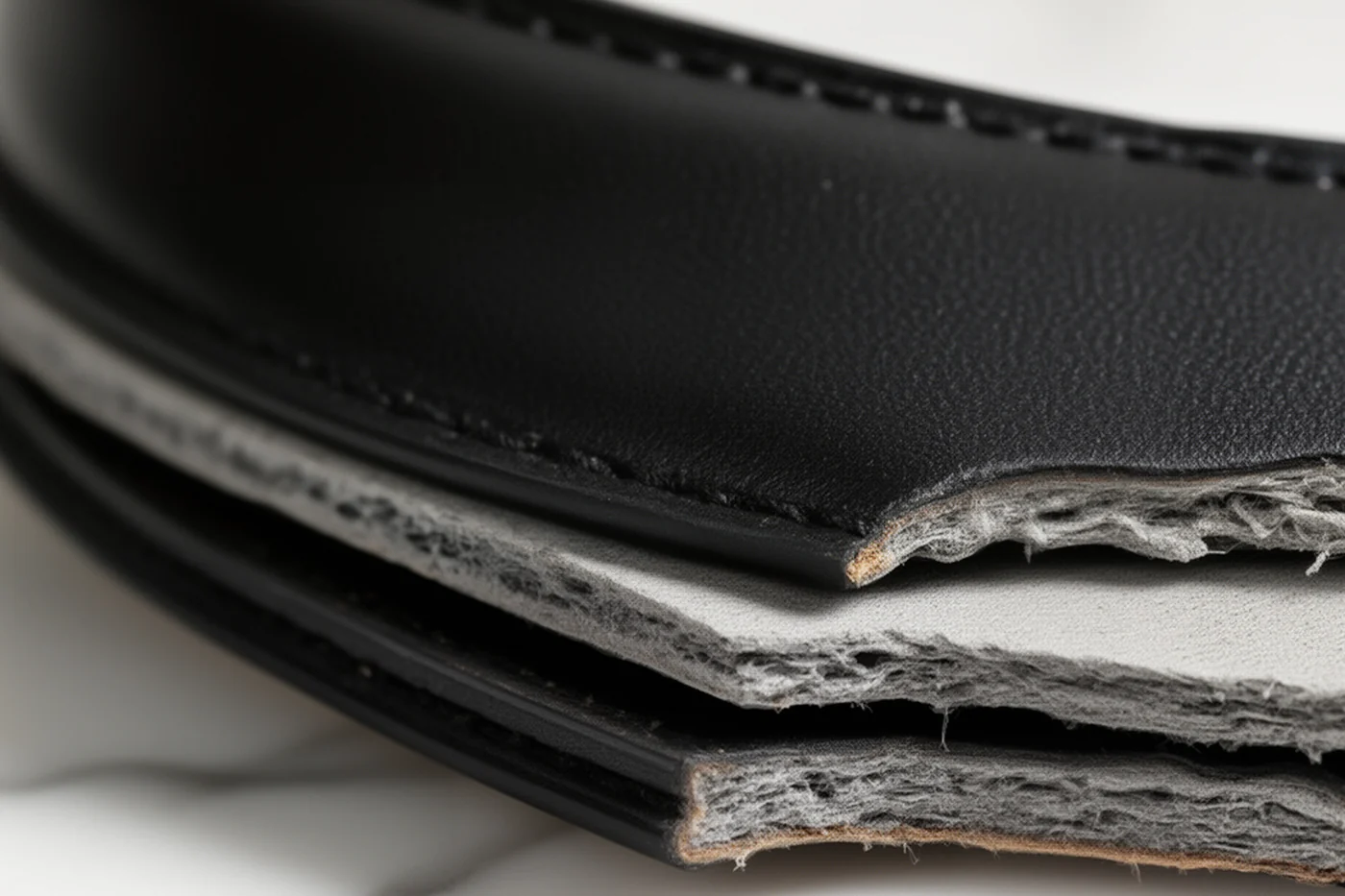
| Bonded | Leather scraps ground up and glued into a sheet, often with a PU face. | Printed coating | Delaminates. Edge splits and shows the core. | Visible layers or fabric at the edge. Light for its thickness. |
The words on a tag are not regulated the same way everywhere, which is how "genuine leather", a phrase that sounds like a promise, ended up describing one of the weakest grades. Read the edge, not the label.
03Full-grain: the only grade I cut
Full-grain is the hide with nothing taken away but the hair. The fibres in that top layer are packed tightly and run in every direction, which is exactly what a belt needs: it is bent at the buckle thousands of times, pulled hardest at one hole, and rubbed against denim, car seats and desk edges every day.
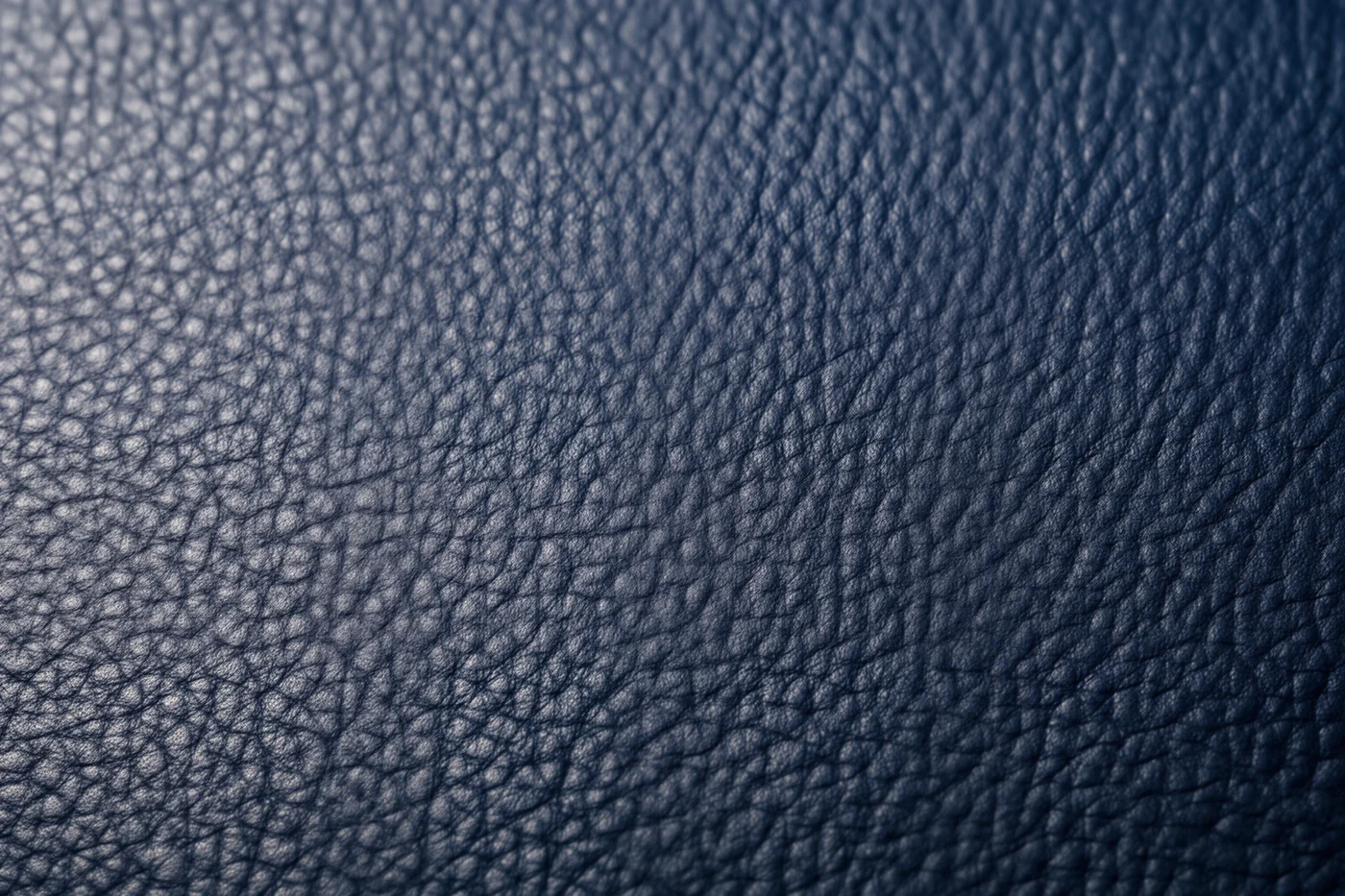
Because nothing is sprayed on top, there is no coating to peel. Because nothing was sanded off, the strongest fibres are all still there. And because the surface is honest, every hide that carries scars or uneven grain is rejected for this grade, which is the real reason full-grain belts cost more.
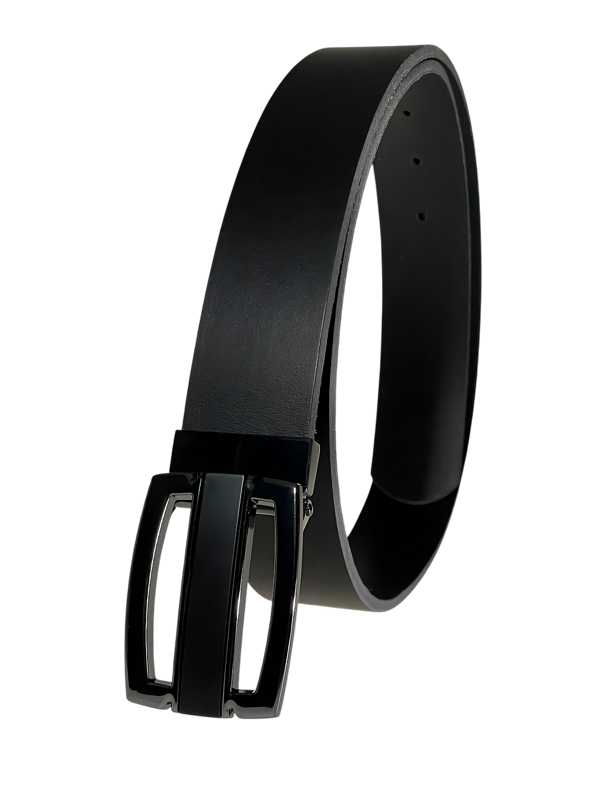
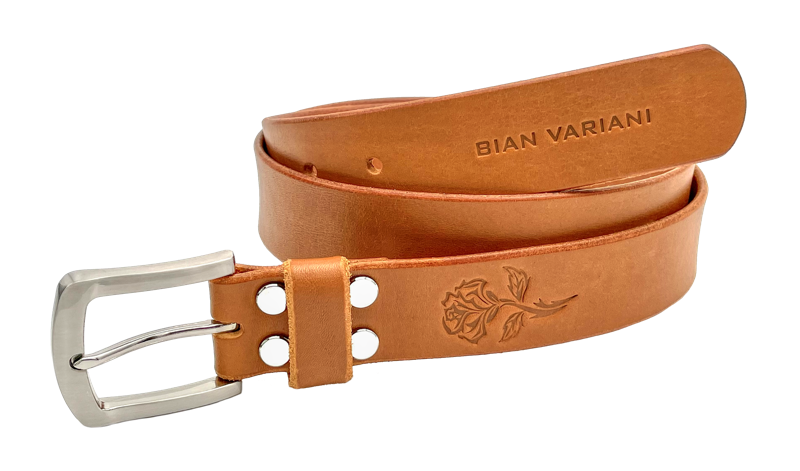
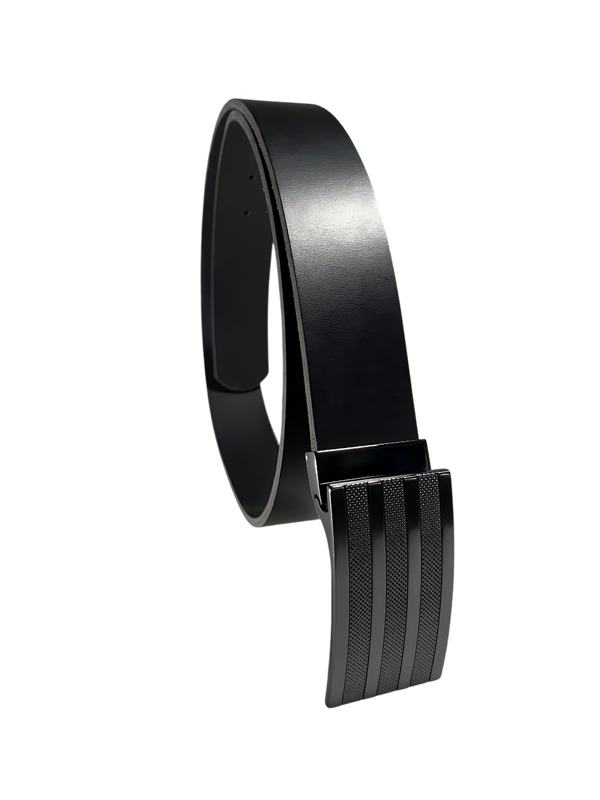
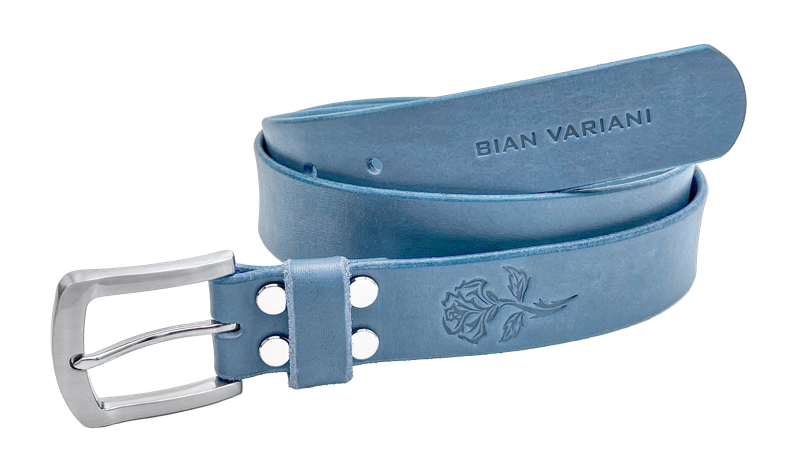
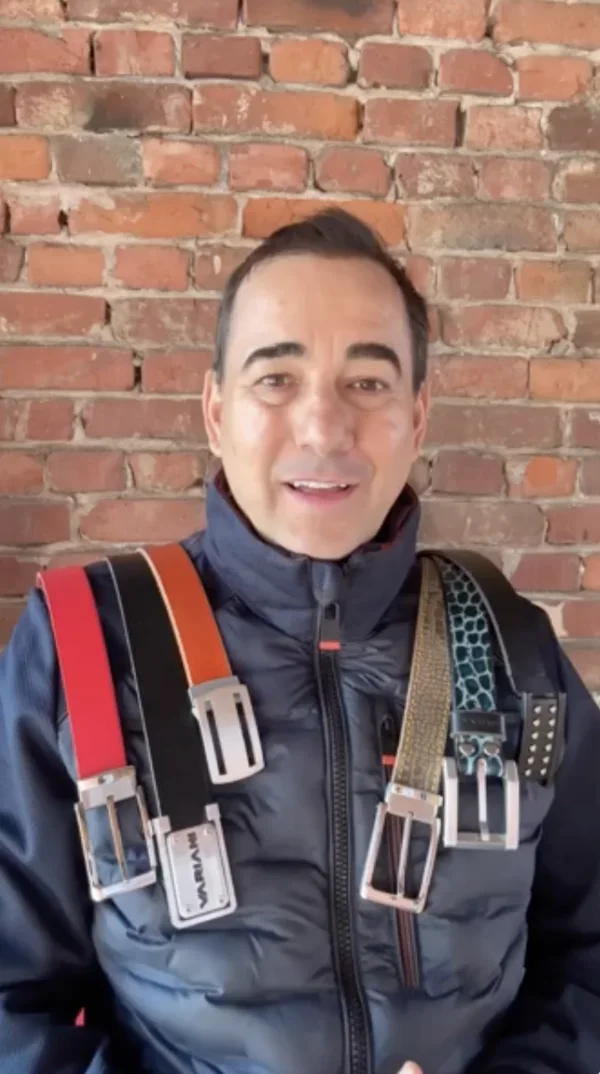
Every Variani belt is full-grain Italian cowhide, cut from one solid piece. I have bought it in person from the same Italian tannery for about thirty years, and some of our straps are cut from heavyweight 10 oz leather.
04Top-grain: good looks, borrowed strength
Top-grain sounds like the best, and it is often marketed that way. In practice it means corrected grain: the natural surface is buffed off to remove blemishes, then a pigmented finish is sprayed on and an artificial grain pattern is pressed in.
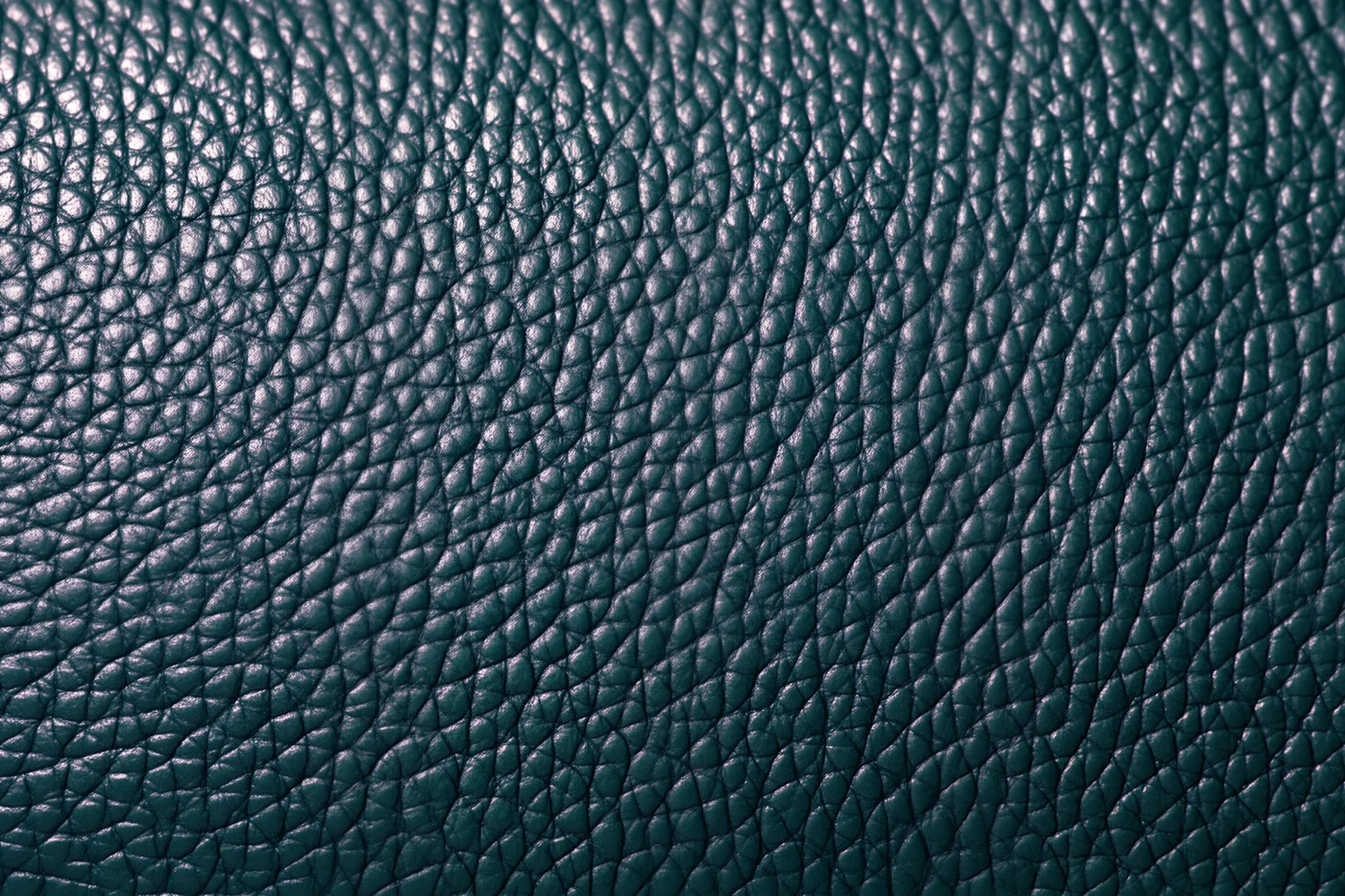
It can make a perfectly decent wallet or sofa. On a belt, the sanded surface has lost part of its strongest layer, and the finish has to flex at the buckle every single day. That is where you eventually see fine cracks running across the fold.
05Genuine and bonded: why they fail first
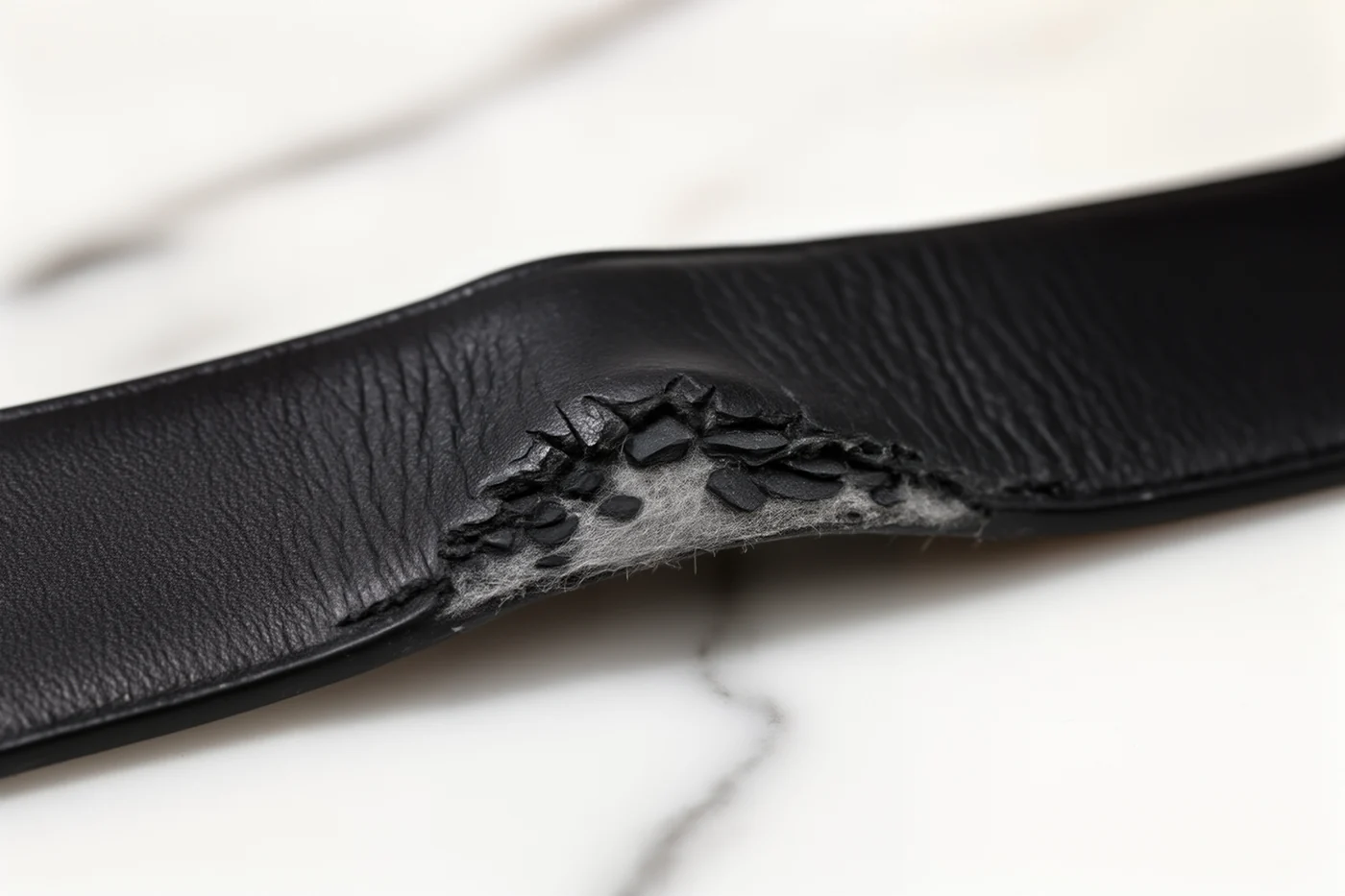
Genuine leather comes from the lower split, the looser corium that is left after the grain layer is taken off. To make it look like a premium surface it is painted and embossed. The paint is the first thing to go, usually right behind the buckle where the belt bends hardest.
Bonded leather is not a layer of the hide at all. It is scraps and dust mixed with a binder, rolled into a sheet and faced with a printed coating. It is light, cheap and uniform, and it comes apart along the edge, sometimes revealing a fabric or board core.
06How to tell the difference before you buy
- Read the edgeFull-grain shows one continuous, dense cross-section. Glue lines, fabric, a fuzzy grey core or a thick painted rim all mean layers.
- Look at the surface in daylightReal grain has pores and small irregularities. A perfectly repeating pattern from tip to buckle is pressed in.
- Bend it back on itselfFull-grain creases softly and stays one material. A coated strap wrinkles like plastic, and you may see the colour change or a film lift.
- Feel the weightA solid strap feels dense for its thickness. Bonded belts are often surprisingly light.
- Read the stamp honestly"Genuine leather" and "bonded leather" stamps are telling you the grade. "Full-grain" is the only one that describes the whole surface.
07Why full-grain costs more, and why it is cheaper in the end
A belt strap needs a long, straight run of clean leather about 1 3/8 inches wide. Full-grain cannot hide flaws, so scars, insect bites and uneven areas are cut around rather than sanded and painted over. Less of each hide qualifies, and the leather itself is bought at a premium.
The trade-off is longevity. A full-grain belt is the one you stop replacing. If you want the numbers, I worked through them openly in Is a US$149 handmade leather belt worth it?
Read the edge, not the label. The edge of a belt cannot pretend.Bian Variani