On this page
01What is actually failing
A belt that peels or cracks is telling you exactly how it was made. In almost every case, the damage is not the leather wearing out. It is a shortcut showing through.
There are only a handful of ways a belt fails, and each one has a single root cause. Once you can name it, you know whether the belt can be saved, and what to buy next.
| What you see | Where | Real cause | Can it be saved? |
|---|---|---|---|
| Flakes or peeling skin | Behind the buckle, at the fold | Painted or PU coating lifting off split or bonded leather | No, only disguised |
| Fine cracks across the strap | Fold and first holes | A sprayed finish that can no longer flex (corrected grain) | No |
| Edge splitting into layers | Along the sides | Bonded or laminated strap coming unglued | No |
| Dry, stiff, pale creases | Anywhere | Real leather dried out by heat or repeated soaking | Often, with light conditioning |
| Oval, torn holes | The hole you use most | Thin or loose-fibred strap stretching under load | Rarely |
| Buckle turning dull or pitted | Buckle face | Thin plating over zinc alloy wearing through | No |
02Peeling: the painted surface gives up
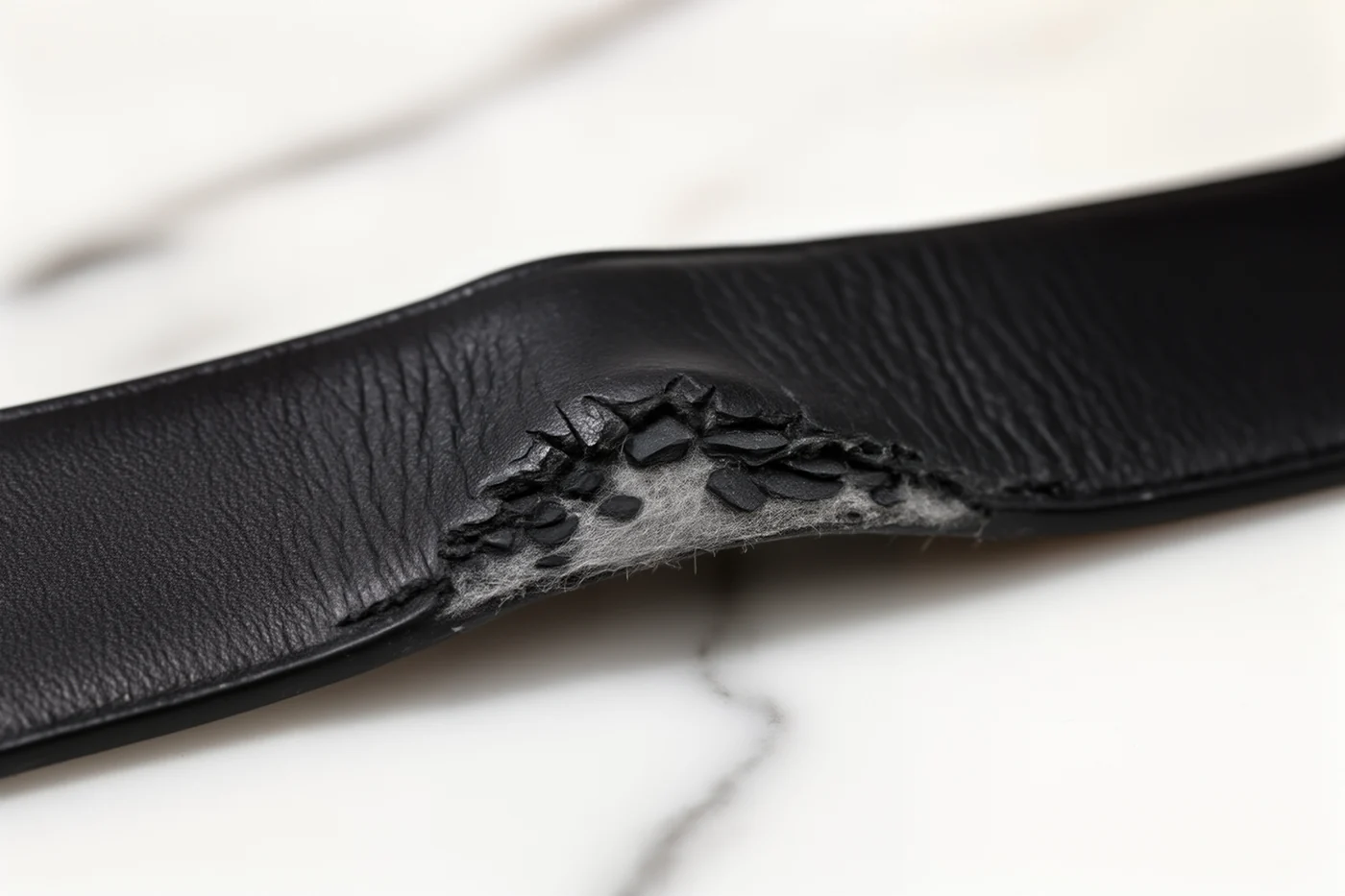
Most budget belts are made from a lower split of the hide or from bonded leather, then given a painted or polyurethane face so they look like a premium surface. That face is a separate layer. Every time you buckle up, the strap bends sharply at the buckle and the coating is stretched on the outside of the curve and compressed on the inside.
After enough cycles, and faster in dry indoor heat or after a soaking, the bond fails and the surface comes away in flakes. That is why peeling almost always starts behind the buckle and at the first holes.
03Cracking: finish or fibre?
Cracks come in two kinds, and the difference matters.
Cracks in a coating
- Fine, web-like lines across the fold
- The colour underneath looks different
- Common on corrected "top-grain" and painted belts
- Permanent
Cracks in dry leather
- Pale, stiff creases, no separate film
- Caused by heat, sun, or soaking then fast drying
- Happens to neglected real leather
- Often recoverable with a light conditioner
Full-grain leather has no applied finish to craze, so the first kind does not happen to it. The second kind is avoidable with ordinary care, and full-grain responds well when it is looked after.
04Splitting, stretching and tired buckles
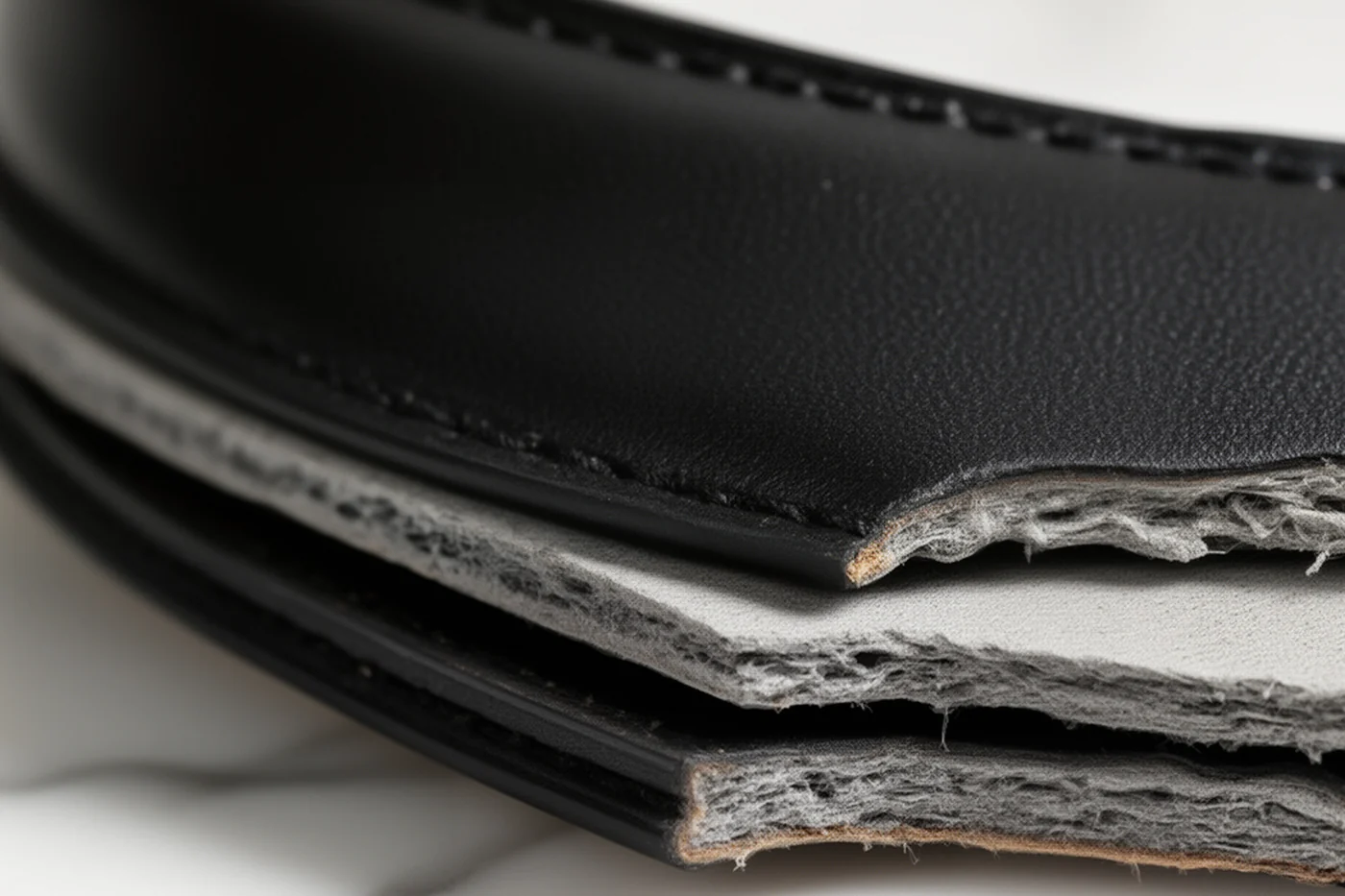
Splitting edges mean the strap was built from layers. Glue lines fail with flexing and moisture, and the edge opens up to show a core of board, fabric or reconstituted fibre.
Stretched holes come from thin straps with loose fibres. The prong pulls on one hole all day, especially when you sit, and the hole slowly becomes a slot. Dense, heavy full-grain resists that.
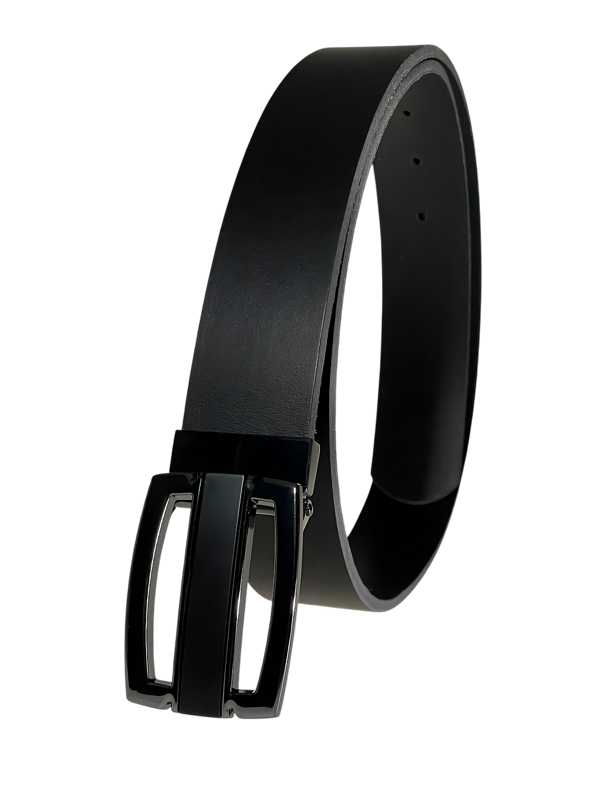
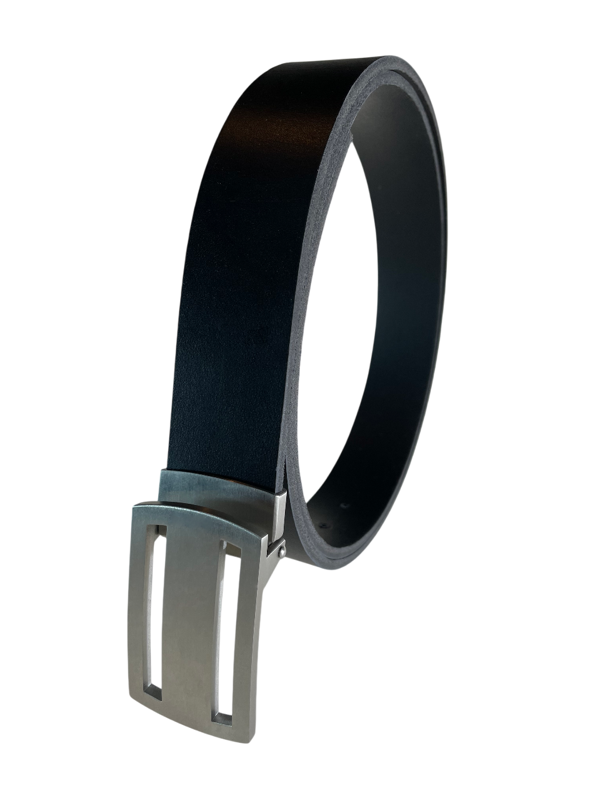
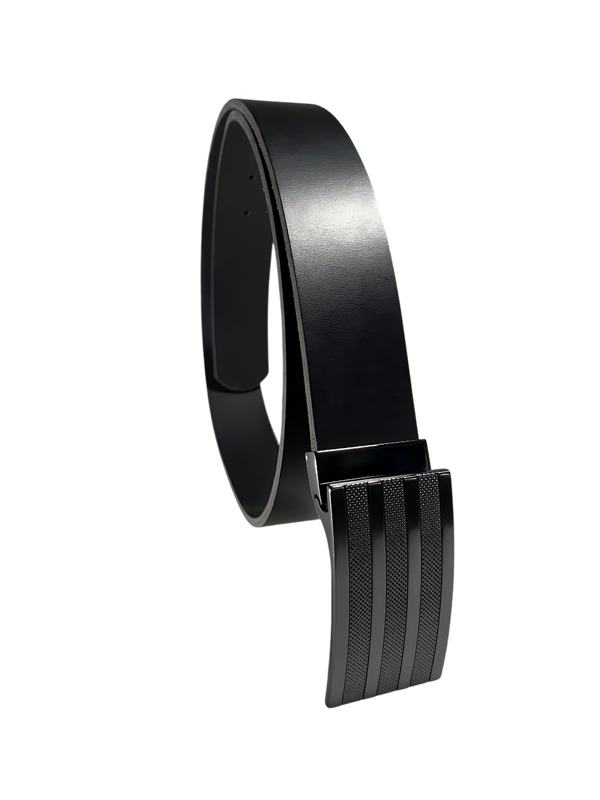
Dull or pitted buckles are plating wearing through on zinc alloy. A solid stainless steel buckle is the same metal all the way through, so there is no skin to lose. Every Variani buckle is solid hypoallergenic stainless steel.
05How to make a good belt last
- Dry it slowlyIf it gets soaked, wipe it and let it dry at room temperature, never on a radiator or with a hairdryer.
- Wipe off salt and grimeA lightly damp cloth removes winter road salt before it dries into white rings.
- Condition sparinglyA thin coat of a quality leather conditioner once or twice a year is plenty. More is not better.
- Rest itRotating between two belts gives each one time to recover its shape.
- Store it relaxedHang it from the buckle or roll it loosely. Do not leave it buckled tight.
06Replacing it: what to buy instead
If your belt is peeling, cracking through a coating or splitting at the edge, it was never going to last, and no treatment will change that. The replacement should have three things: full-grain leather with no applied surface, a single solid piece rather than layers, and a solid stainless buckle rather than plated alloy.
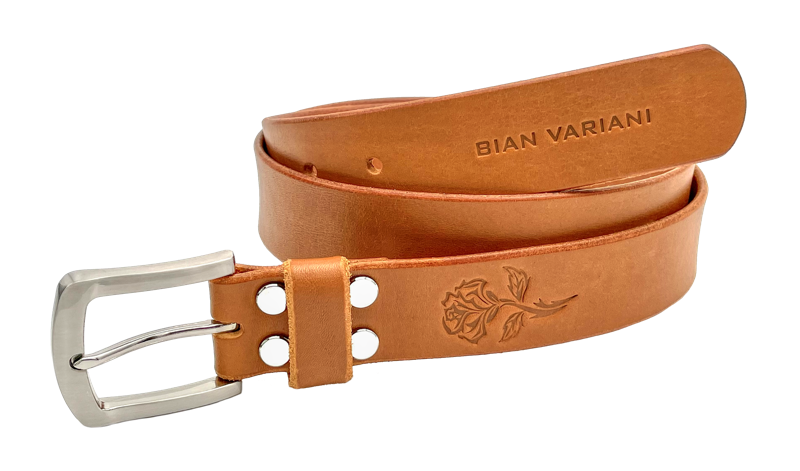
That is the whole brief I work to. Every Variani belt is cut by hand in Vancouver from one piece of full-grain Italian cowhide, in every even size from 26 to 58. If you want to understand the grades in detail first, read full-grain vs top-grain vs bonded leather.
A peeling belt is not worn out. It is a shortcut finally showing.Bian Variani